Showing posts with label Hilary Calvert. Show all posts

Monday, 5 August 2019

Hilary Calvert ORC candidate: "it was clear the regional council could do better"


Calvert returning to local politics


Hilary Calvert
Hilary Calvert
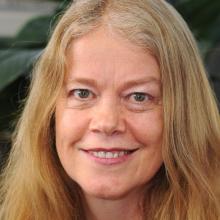
A former member of Parliament and Dunedin city councillor is having another crack at local government. Hilary Calvert yesterday announced she will stand in this year's local body elections for a seat on the Otago Regional Council.
The former Act New Zealand list MP and one-term city councillor said it was clear the regional council could do better.
Particular areas of focus would be pest control, making sure rivers and lakes were looked after and ensuring the council carried out its regulatory functions, Ms Calvert said.
"We are at a crossroads with some of these issues.
"I believe I could help refocus the Otago Regional Council on it's obligations and opportunities to lead Otago in looking after our environment, rather than the current fixation on the endless quest for new premises," Ms Calvert said..........
www.odt.co.nz/news/dunedin/calvert-returning-local-politics

Bad news for those facebook wishers, below - Hilary says 

"Running for DCC and ORC is not allowed.

The thing is that with the people who will get on to the DCC it does not look possible to make useful\necessary change."


Facebook, following the odt article:


Kathleen Foliaki So pleased but are you running for mayor?
1

  • Wendy Northcoat
    Wendy Northcoat Oh how I would LOVE you to run for mayor someone with integrity and common sense
    2


Friday, 12 July 2019

Cycleways H.C 20/8/15 "Time to put brakes on cycleway"


Time to put brakes on cycleway


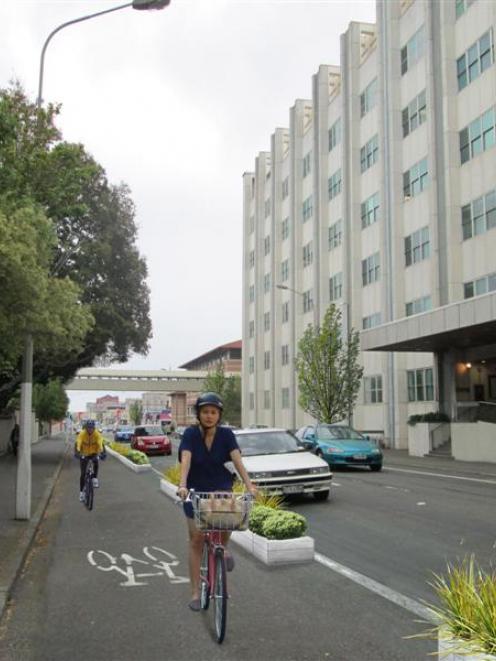
Done deal? A slice of a proposed cycleway on State Highway 1 opposite Dunedin Public Hospital....
Done deal? A slice of a proposed cycleway on State Highway 1 opposite Dunedin Public Hospital. Image from New Zealand Transport Agency.
The Dunedin City Council is sleep-walking to yet another poorly thought out cycleway project, writes Cr Hilary Calvert. Can the council not stop and have a better look at the State Highway 1 proposal? Somehow, the Dunedin City Council has been so beguiled by the gift-horse that is the New Zealand Transport Agency (NZTA) that it seems to have completely forgotten to carry out its proper role of looking after the interests of the citizens of Dunedin in respect of the State Highway 1 cycleway plans.
 
Cycle safety plans along SH1 require funding from NZTA and acceptance by council of the flow-on costs to the citizens of Dunedin. But the council seems to be taking no part in this process.
There has been no provision for any costs to ratepayers in the long-term plan consultation process.
There have been no attempts to deal with parking revenue reduction.
There have been no joint endeavours to find an option that looks at both the NZTA safety issues and the effects on those who use our streets, parks and footpaths.
There has been no challenge to the NZTA about how its idea of the number of cycleway users in the future would require an entire lane along two streets following essentially the same route.
Three years ago, the council was concerned about cycle safety along the one-way streets and asked NZTA to look into cycleway options.
NZTA took up the challenge and in in May 2013 it came to the council with a progress report.
The council resolved the eastern footpath of the one way north be considered as a long-term separated cycleway (Cr Jinty MacTavish voting against).
By September 2013, two options were being considered by NZTA, option 1 involving a separated bicycle facility (SBF) along both one-way streets, and option 2 an SBF for cycle travel both ways down only one street.
These were consulted on and more strongly supported option 2, losing an expected 185 parks, over option 1, losing 391 parks (both before any possible Council mitigation of parking losses).
A moderated version of option 1 (called 1A) was then found, losing 198 parks.
On April 1, 2014 the council identified the next key decision point about whether the project proceeds was when an indicative business case was completed, at which time the report would be presented to the infrastructure services committee for consideration.
Since then the council has heard nothing.
The public has become increasingly concerned about this issue, as evidenced by various articles and letters in the ODT.
The museum (parking), the AA and businesses threatened with losing their parking have all raised concerns.
And now it seems the council is effectively out of the loop and the NZTA will decide which, if any, plan will go ahead. The NZTA says that options 2 and 1A have been all but dropped and a loss of 370 parks is included in the plan.
Dave Cull says that ''we're confident that we can mitigate any parking losses, and we may end up in a better position in terms of car parks''.
How this could happen was not specified. The chairwoman of the infrastructure services committee, Kate Wilson, says: ''Infrastructure needs to change over time, and they're never cheap.
But ignoring them just isn't an option ... ... '' and '' ... If we want to be a modern, liveable city people want to live in, we need to do this. There's no choice here.''
The choice about whether to build it, or whether there might be one or two cycleways seems to have been made behind closed doors in secret meetings by NZTA.
Our mayor and the chairwoman of the infrastructure services committee seem to be treating this as a done deal, requiring the only council input to be to see if we can mitigate some parking concerns.
It has not come back to the council, as per the resolutions of April Fool's Day 2014.
It is clear there have been meetings behind doors by various so-called stakeholders, where the proposal with less effect on parking, favoured during consultation, has been scrapped in favour of a proposal of a loss of almost 400 parks before mitigation.
This is not totally the fault of NZTA. Its position seems to be it has completed its side of the bargain, and the flow-on effects and loss of parking are none of its concern.
The council has given up its control of the situation without ever having confronted the choices or costs to our citizens. It is time for the council to call time out.
It is time for the council to have a proper think about the changing needs of our citizens and whether there are alternatives and/or better options available than the ''my way or the highway'' proposal that seems to have been decided on by NZTA.
This may include rethinking the two-way pair or shared paths as originally considered three years ago and would certainly involve a need to be conscious of the parking impacts, lost city revenue and general convenience to road users.
We should not ignore the wishes of the people, in favour of letting the NZTA dictate our future. There are no free cycleways.

H Calvert 17/05/19 "Council squabbling reveals sad state of affairs"


Council squabbling reveals sad state of affairs


Lee Vandervis.
Lee Vandervis.
The recent shutting down of discussion in a DCC meeting by Cr Kate Wilson and subsequent airing of the emails preceding the meeting have exposed the playground bullying among some council members. In this case, the council members who regularly belittle those who do not share their views were unaware that the equivalent of someone filming the bullying had taken place, namely Cr Lee Vandervis being in a position to provide emails showing what had actually happened.
The underlying frustration from Cr Vandervis is a natural reaction to a council which does most of its work behind closed doors and without keeping some of the councillors in the loop.
Mayor Dave Cull has for many years kept Cr Vandervis and others away from the hub of the decision-making, any part in chairmanship of the top committees, and the sharing of information.
Over two years ago, Cr Vandervis raised the idea of a Unitary Authority. Cr Benson-Pope told him to ‘‘stop bleating’’ and put forward a motion. Cr Vandervis duly did, and the staff were to prepare a report with pros and cons and a way forward. This resolution was then passed unanimously.
Two years later, the report had not been produced and the progressing of it had been given low priority by the staff.
Cr Vandervis asked on March 1 when the report would come to council. By March 21, he was suggesting that his requests were routinely being stonewalled or answered late, for which Dr Bidrose apologised, saying she thought she had answered.
By the end of March, the bullying machine was fully operational.
Cr Benson-Pope suggested in an email that ‘‘Perhaps applying the recently agreed charging policy would help our vexatious colleague focus’’. (This is the policy about charging those who ask for information from the DCC if the requests become too cumbersome).
Cr Stedman sent an email which began with ‘‘I don’t think the other elected members care to be honest Lee . . .’’
Mayor Cull contributed by saying it was up to Dr Bidrose to decide work priorities, as if carrying out a council resolution was something that could just be shelved.
Cr Benson-Pope brought the issue back to the council meeting to overturn the previous request for a report. He then explained his point of view, and Cr Wilson moved a motion to stop any further discussion on the basis that Cr Vandervis was using his inquiries about the whereabouts of the report for electioneering, and that since she was not standing again it didn’t matter if she moved this motion.
So keen was Mayor Cull to accept this motion that he failed to grasp that it was not able to be put, since the requisite numbers of people had not spoken to the motion.
Crs O’Malley, Hawkins, Elder, Vandervis and Whiley opposed the motion to shut down any discussion.
Cr Whiley has since said that democracy had not been allowed to take place.
And Mayor Cull has described the motion as completely democratic.
Mayor Cull made various allegations about Cr Vandervis, including that Cr Vandervis suggesting Dr Bidrose had failed to execute council decisions was harassment and plainly wrong, was tantamount to bullying, and that Cr Vandervis had a propensity to abuse women. He threatened Cr Vandervis with public censure.
Whether there was good reason for the failure to prepare a report, the comment by Cr Vandervis along the lines that it hadn’t been provided to council was patently accurate. As for the balance of the wide-ranging allegations made by Mayor Cull, they appear from the email trail to vary between wrong, petulant, ill advised and improper.
It is deeply disturbing that the old guard of councillors, with the mayor leading the charge, have been teaching the new ones that trying to shut down debate and questions is an appropriate way of forcing a councillor into submission.
The last time the council had a serious attempt at shutting Cr Vandervis down was in 2015.
Voters must have believed at some level that Cr Vandervis asking questions and doing what he does was a good thing, since after that attempt he was reelected as the highest-polling councillor.
The second-highest polling councillor in the last election interestingly was Cr Whiley, who spoke up in defence of democracy and letting the recent discussion happen.
And the third-highest polling councillor was Cr Hawkins, who also voted against shutting down discussion.
It would seem that the voters have a good grasp on who may be behaving well and serving the interests of democracy on their behalf.
We can only hope that councillors will reflect on the fallout from this sorry saga and that they may at least realise that bullying elected representatives with gratuitous and groundless allegations is inadvisable: even when you do so behind closed doors, you may be found out — or voters might just have the intuition to understand who stands up for them. — hcalvert@xtra.co.nz
Hilary Calvert is a former lawyer, politician and city councillor.

 https://www.odt.co.nz/opinion/council-squabbling-reveals-sad-state-affairs

Vintage H.C - Pre-election reminder "Scope for more democracy with checks and balances"


Scope for more democracy with checks and balances


Is local democracy at risk? lawyer and sitting Dunedin city councillor Hilary Calvert asks.
In the past three years Dunedin City Council has functioned just as central government does, with a government and an opposition.
But the problem is that in Dunedin it means central government-style politics without the checks and balances.
Because the mayor of the day is allowed to choose the chairs of the council committees, if the mayor anoints those who are similar in their views to him or her, effectively a ''government'' is formed.
Those on the ''government'' side support each other, forming a version of the ''cabinet'', with meetings between themselves alongside senior council staff to discuss the issues of the day.
Those who are not part of this grouping are obliged to form a loose ''opposition'', because this is the only place where any public challenges and questions are likely to come from.
In central government this system has a series of built-in checks and balances which enable democratic outcomes.
For one thing, in Wellington the opposition parties and the media have access to cabinet papers and advice given to Government, as well as Treasury reports and the like.
In Dunedin, however, the chairs of committees forming the ''cabinet'' meet secretly and without any minutes which can be accessed.
They may be part of working parties with other groups, which never report back to the council, for example groups meeting with NZTA about cycleways.
They may have information either before the rest of the council or outside the rest of council papers, never to be seen by council.
And in Wellington, Parliament works with a Speaker who is charged with being impartial, and who is not involved in the voting process.
In Dunedin we have the mayor chairing council, not only with an active part in the proceedings but also with both a deliberative and a casting vote.
He (or she) is in a position to chair the meeting while being part of the proceedings, and can decide on whether standing orders are followed.
Anyone who wishes to complain about the behaviour of the chair must convince the cabinet to uphold the complaint, an unlikely outcome.
The role of the media is different, as well. In Wellington, with the Parliamentary Press Gallery, it is likely that any interview from one side of an argument will be followed up by an interview with a member of the other side, and sometimes several other sides, so the public can hear not only the government position but also any opposition viewpoints.
In Dunedin, the ODT describes what happens in council meetings, talks to the chairs of the meetings, and prints press releases, having clarified the situation with a relevant staff member.
There is little chance for any challenge of prevailing views unless a major debate happens during meetings, or unless the issues raised are ones which the ODT chooses to follow up in an in-depth way.
The lack of a formal outlet for real exchanges of views and information within council can, and currently does, lead to frequent criticisms of the ''opposition'' as being wrong and poorly informed.
Our council actually functions within the minimum requirements of the law.
However we could have a much more democratic and transparent operation of council. -
A wise mayor could be expected to choose chairs from a broad spectrum of council, including those with different views from his/her own, and taking into account the highest-polling councillors, since these are clearly the councillors who the people have considered most favourably.
•The mayor could give each councillor a portfolio which would allow the public to hear from them on a variety of topics and form a view of their effectiveness.
•The ''cabinet'' could function with full public minutes, and when they and others are forming groups the minutes of these groups could be public.
•The ODT could more often ask for a variety of views about the issues of council as an extension to reporting meetings and press releases controlled by a few chairs.
•We can encourage the ODT to extend the way it covers local council matters.
•However, right now we can choose a mayor who will allow us and those we vote for to be heard and to be challenged on the issues of the day.
•Ask mayoral candidates who they will choose for their chairs, and using what criteria. Ask whether he/she will give portfolio positions to all councillors so we may hear from them on issues.
•Ask what they intend to do behind closed doors and why.
•Ask in what circumstances they intend to use both a deliberative and a casting vote.
•Ask how they intend to ensure a variety of voices are involved in advisory groups such as those concerning cycleways or buses or 2GP proposals.
We only have one chance every three years. Dunedin deserves and needs the best, which will happen only if we demand the best of our representatives and leaders.
-Hilary Calvert is a Dunedin City councillor, who is not standing for re-election.
[The ODT stands by its comprehensive Dunedin City Council coverage. - Ed.]

 https://www.odt.co.nz/opinion/scope-more-democracy-checks-and-balances

H.Calvert (ORC) Hang on, that's our money 12/07/19


Hang on, that's our money


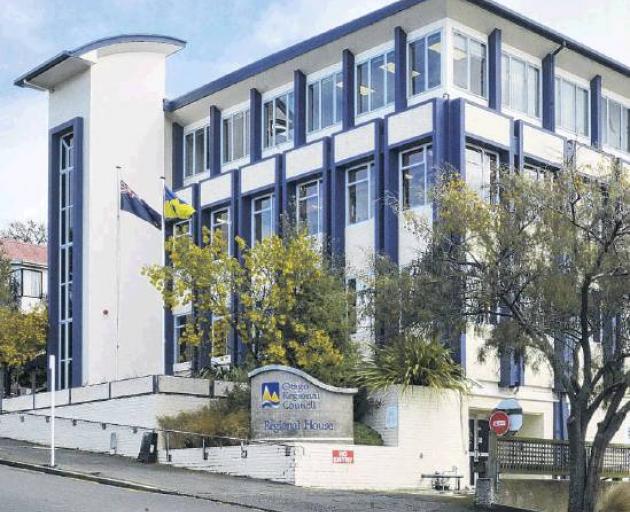
The Otago Regional Council offices in Stafford St. PHOTO: ODT FILES

The Otago Regional Council is clearly struggling with property issues, writes Hilary Calvert. On the one hand it has spent the scandalous amount of $10 million on not finding new premises. At the same time it is giving some of the land around the harbour away.
We will never have anyone owning up to being the person who has advised the ORC on the wasting of our money on searching for a new home for the ORC. Apart from any of the money which has been spent on local advisers, thereby keeping money in the Dunedin economy, there is absolutely no good in this spending. Even the idea of looking to build a replacement building for the ORC is flawed.
For starters for the amount spent so far the ORC could already have purchased a building sufficient for its needs. Just for comparison Burns House, which has a rateable value of $10.5 million, has somewhere in the vicinity of 8500sq m. The ORC only needs about 3000sq m, so it could have leased out the balance and be way ahead.
It is also uneconomic to build a new building compared with the cost of buying or leasing an existing building. Replacement costs for a commercial building in Dunedin are three to four times the cost of buying an existing building. That is why nearly all the cranes in our skies involve public money. If the problem the ORC has is that it wants to build somewhere central and include lots of parks, it is time for it to think about it being a daft idea to increase the demand for parking in central Dunedin beyond that already required by existing buildings.
Recently we heard in the paper that the ORC had failed to buy land to build on, and that it did not even seem to know it was no longer in the running. Undeterred, it was off within days to look into yet another property.
Possibly the ORC has been getting its property advice from Chalmers Properties.
Chalmers Properties is the property arm of Port Otago, which is fully owned by the ORC, so actually we all own Chalmers Properties.
Sadly, because Port Otago is not subject to the Official Information Act, we have no ability to find out what its subsidiary Chalmers Properties is actually doing.
What we do know is that Chalmers Properties, or Port Otago as it was reported, has just given away land belonging to us as ratepayers to the University of Otago, essentially a taxpayer-funded institution.
Port Otago is "controlled'' by the statement of intent (SOI) it negotiates every three years with the ORC. This SOI is an agreement between the "shareholder'', which is the ORC, and Port Otago, where Port Otago agrees what it will do with the company and assets it controls.
The objectives in the current SOI include:
"To communicate the company's plans and achievements to staff, shareholders and the wider community and to be receptive to constructive comment.''
Under the "nature and scope of activities'' headings of the SOI is included growing the investment portfolio and selling leasehold land where a sale would enhance development and employment opportunities in Dunedin.
However, nothing in this agreement suggests Port Otago is authorised to give our land away.
The piece of land that was given away cost $2.4 million to clean away the asbestos after which it would have been worth about $300 per square metre.
So Port Otago has given away $3.75 million of our assets to the university. This price may be lower if the Government doesn't stump up with money to repair the wharves, but in any case the principle is the same.
The reason for the gift was apparently so that the university can build something on the waterfront. We can assume that it was hoped that whatever the building is would be in keeping with the waterfront vision if it ever goes ahead.
Or maybe not. We cannot know, since none of those who are discussing waterfront visions seem to think we should be kept in the loop about what they are up to......

more -  https://www.odt.co.nz/opinion/hang-thats-our-money

Saturday, 29 June 2019

Hilary Calvert 27 June 2019 "Oxymorons and gibberish; plain English please"


Oxymorons and gibberish; plain English please


Finance Minister Grant Robertson with the 2019 Budget. Photo: Mark Mitchell
When politicians talk gibberish we should demand they tell us what is really going on. It should not be all about spin. It should be all about the substance. Worldwide, voters are increasingly disenchanted with politicians banging on using meaningless words.
For our part, in New Zealand, there is little excuse for lack of clarity from our politicians. We have a government that prides itself on transparency, is led by a prime minister with a degree in communication and is supported by the Green Party, who have more university qualifications between them than the rest of us have had hot dinners.
It should be easy to achieve accurate and direct communications between the Government, the Opposition and the people.
The stakes are high. Once politicians use words poorly or inappropriately, we lose trust in them. No proper debate is possible and views become increasingly polarised.
But the gibberish is increasing all the time.
Take the Wellbeing Budget released recently, watched around the world as a possible game-changer.
This oxymoron covers for something that we likely do support. It is intended to signify the importance of rating our society not totally on financial measures but also on social and health measures.
However, a budget is what we produce when we allocate a specific and restricted amount of funds to various activities. Wellbeing, on the other hand, is infinite. Wellbeing cannot be budgeted for. And money we spend does not have any necessary effect on wellbeing.
While there are various measures we can have of wellbeing, none can promise that an extra amount of money will produce extra wellbeing. The two words wellbeing and budget simply do not belong together.
The reason they are being put together is to give the voters an idea that somehow the Government is doing something different with the Budget.
Whether the Government is actually doing something about the parlous state of provision of health services is important. We are seriously falling behind other developed countries in mental health, dental health, cancer treatments, to name but a few. Using wellbeing beside budget is not likely to fool anyone nor to engender trust in the people of New Zealand.
We are now hearing that Kiwibuild is having a reset. Reset is the word we use for pushing a button hoping a moribund appliance will somehow spring back to life when all else fails.
Grown-ups who wanted to communicate reasonably with voters would say that it was not intended to pursue the concept of Kiwibuild and that a new approach was being taken. The Government does not need to say it was a shambles and a failure, but to be straight with voters it is unhelpful to say Kiwibuild is still happening, albeit with a ‘‘reset’’.
Councils throughout New Zealand are deciding that their areas are having a ‘‘climate emergency’’.
These words do not sit properly together. We know what an emergency is from a local government perspective. It involves civil defence, sand bags, communications about evacuations etc.
The councils who have voted for a climate emergency now have no idea what to do, apart from allocating money for it.
Nelson city has voted to employ a climate champion. Since when would the response to an emergency be a champion? Is this some new superhero, able to stop the tides in their tracks and cool the planet in a single large investment?
We really need to have discussion about how to tackle our health issues, which are reaching crisis proportions, for those who expect us to be a modern country with good, if not excellent, healthcare. We have serious issues about housing to confront. And we need coherent and effective climate change responses.
None of this will happen while we cannot use proper words and have proper conversations about the issues.
If we are banning some sorts of speech, we should start by banning politicians from using words intended to hide rather than elucidate.
Surely they should sell their ideas and plans to us, but truth in advertising should be paramount in telling us what they are up to.
One of the international wellness index measures relates to civic and democratic participation. A high rating requires an active electorate who trust their politicians and what they hear from the media.
We could be a world leader in having government and local government who actually use words to communicate clearly and accurately about what they are doing with our money, and prepared to hear arguments for and against their proposals.
That really would be a game-changer.
Now would be good, so we can practise our newly enabled democratic ideas on our candidates for local body elections coming up. — hcalvert@xtra.co.nz
Hilary Calvert is a former lawyer, politician and city councillor.