Rod Oram investigates the political, economic, and business spheres in New Zealand.
Comment
Unjustifiable vandalism and grand promises
Take a close look at
both the economics and science of the foreign investment proposal that
entails the destruction of an invaluable fossil site dating back 23
million years. Rod Oram did, and is far from reassured.
Some offers by foreign investors to bring their capital to New
Zealand promise such riches, at least for them, that their forecasts
soar into the realms of implausibility.
Such are the promises of Plaman Global, an Australian/Malaysian
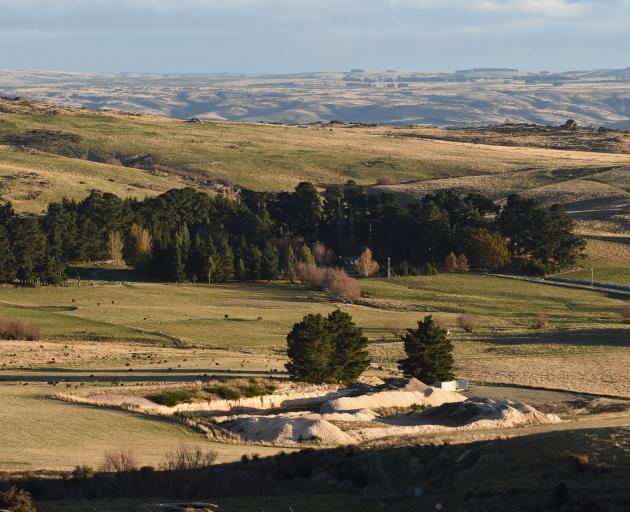
company with its highly controversial proposal to turn the unique,
invaluable and fossil-rich Foulden Maar in Otago into an animal feed
supplement.
When it hits full production three years after starting up, Plaman
reckons its mining and processing operation will generate US$1 billion a
year in revenues and US$780 million in EBITDA earnings.
Given it’s promising 100 jobs, that works out at revenues of US$10m
and EBITDA of $7.8m per employee. That would be fabulously profitable
for the investors, while the locals would earn only typically modest
mining, trucking and processing wages.
By way of comparison, OceanaGold’s Macraes mine, just 25km to the
northeast of Foulden Maar, employees 559 people. A low cost and highly
profitable gold mine by NZ standards, it generated US$449,732 of revenue
and US$259,210 of EBITDA profit per employee last year.
Thus, Plaman’s claims for its Foulden Maar opencast mine turn out to
be 22 times the revenue and 30 times the profit per employee of our most
profitable gold mine. For the next 27 years.
No wonder the Overseas Investment Office is taking so long to decide
whether to approve Plaman’s application to buy an additional 432 ha of
land at Foulden Maar. This would lift Plaman’s estimated resource from
6.1m tonnes on its current 42 ha site, which is still not in production
three years after buying it, to 31m tonnes of fossil-rich earth. Under
the Overseas Investment Act, the OIO has to decide, among other issues,
whether an investor’s bona fides are acceptable and its project of
economic benefit to New Zealand.
Over the past 10 days,
Newsroom colleagues have written about the
importance of the fossils, the
ownership of Plaman, the deep scepticism among scientists of
its claims for its animal feed, and the
rapidly growing opposition to its proposal. In addition, we have produced with RNZ this
podcast.The issues are being heavily canvassed by other media too.
The mystery of the finances
This column will look at the economics of Plaman’s proposal and its
abilities to deliver. The verdict is far from reassuring. As such, this
column is the antithesis of
last week’s
which analysed three recent, large foreign investment proposals which
will benefit the New Zealand economy, albeit with varying degrees of
risks, downsides and impact.
Plaman’s claims for the economic upside of its project come from the
report on the project written by the NZ branch of Goldman Sachs, the
Wall Street investment bank, which has lent Plaman US$20m as seed
funding for the project. Simon Hartley, a journalist at the
Otago Daily Times, received a leaked copy of the report. He reported some of the highlights of it on April 20.
As for its ability to deliver on its promises, Plaman faces at least
three substantial challenges of coming up with the expertise, capital
and product required. It is still a skeletal company founded in 2014 to
acquire the original 42 ha site at Foulden Maar. It bought it from the
receivers of Australian owned Featherston Resources which had bought the
asset in 2011 but had gone broke trying to turn it into an economic
mine.
Plaman, led by people with investment banking and real estate
experience, has hired a few senior executives with animal nutrition and
mining experience. Its sole NZ employee so far is Craig Pilcher, a
veteran of coal sales then mining operations in the South Island, most
recently as Bathurst Resources’ GM for its mines producing coal for the
domestic market.
On the issue of capital, Peter Plakidis, Plaman’s co-founder and chief executive, told RNZ’s
Nine to Noon
programme on Tuesday that if the OIO approves the land acquisition,
Iris Corporation, its 50.9 percent Malaysian shareholder with links to
palm oil plantations, would exit. Most of the other 49.1 percent of the
company is owned by its other co-founder and chief financial officer,
Geordie Manolas and his family, who are wealthy real estate investors in
Australia.
The Malaysian exit would only deepen the mystery of the finances of
Plaman. Given its plans to build a $36.8m processing plant at Milton,
100km south of the opencast mine, and to buy out Iris, the US$20 m of
seed funding from Goldman Sachs will be far from adequate. Even more
curious is the Goldman Sachs view that that the project’s cashflow will
fund the US$470m of capex needed to achieve the rapid scale up over
three years to 500,000 tonnes of finished product a year.
Product promises
Delivering on its product promises is even more daunting for Plaman.
Its website says the black diatomaceous earth deposit it owns at Foulden
Maar, which it hopes to expand with its additional land purchase, is
unique. There are many large and long-mined diatomaceous earth deposits
elsewhere in the world, likewise formed from fossilised remains of tiny
aquatic life. But depending on their purity, they range from white to
grey.
Plaman says its is black because it is “rich in natural organic
matter (which contains humics, such as humic and fulvic acid) and other
valuable nutrients, which have been shown to be beneficial in animal
nutrition. Plaman Global is the only supplier of Black Pearl. No other
known deposits of Black Pearl’s® unique composition have been
discovered, nor are any comparable products being commercially developed
for animal feeds.” (Black Pearl is a trademark it has registered in a
number of countries for fertiliser and in some cases animal nutrition.)
In June 2018, Plaman’s Pilcher gave a presentation to the Strath
Taieri Community Board, the part of Dunedin City Council which covers
Foulden Maar and its neighbouring town of Middlemarch.
One of his slides claims that Black Pearl benefits animals in 10
ways. It “increases average body weight gain; reduces Mycotoxin via its
binding qualities; safe and effective ingredient and safe for human
consumption; slows oxidation in feed; reduction in waste released into
the environment; increases feed conversion and improves carcass yield
and meat quality; lower mortality; organic feed additive; increased
nutrient absorption and improves gut health; and reduces prevalence of
salmonella and E.coli.”
Five months later Plaman received a strong and long letter of support
from the chief executives of Dunedin City Council and Clutha District
Council, respectively Sue Bidrose and Steven Hill; and a letter of
support from Dave Cull, Dunedin’s Mayor, although this past week his
support has become more equivocal.
Indeed, diatomaceous earth is used in a
wide variety of
industrial, construction, agricultural and horticultural uses, and some
brands are registered as organic here and elsewhere in the world.
However, Plaman is claiming it offers additional and unique qualities
for the benefit of animals, even though the previous owner of the
deposit struggled to find many uses beyond an additive to concrete.
A number of animal nutrition scientists are deeply sceptical, or even
dismissive, of Plaman’s claims, as Newsroom’s Farah Hancock
reported last week.
Last August, Plaman told the NZ Quarrying and Mining
magazine that
“Black Pearl is a unique product with proven efficacy from trials
conducted by AHPharma Inc, one of the world’s leading animal nutrition
research houses based in the USA.”
Seeking to verify that, I discovered from AHPharma’s website that it
has facilities that could possibly do such tests, although it
specialises in poultry. However, it had only 38 employees and revenues
of US$7.5m last year, according to business directory ZoomInfo. It seems
improbable it has the global standing or range of skills Plaman claims
it has. Four of AHPharma’s executives, including its chief executive and
VP business development, have failed so far to return my calls.
The only online reference I could find to any study for Plaman was
one last June on Animal Pharm, a UK-based agribusiness newsletter.
It said:
“The company has already confirmed 'outstanding' efficacy in a 42-day
study for Black Pearl in broiler chickens and similar results in a swine
trial. Additional trials in turkeys and layer chickens are ongoing.”
Plaman has yet to reply to my request for information on the research
studies it has commissioned, which organisations did them, and what the
findings were. These would need to prove Plaman’s yet-to-be produced
Black Pearl product had considerable and unique benefits over other
diatomaceous earths to justify the substantial price premium and
eye-popping business model it is promoting.
If our farmers let their animals chew through such a unique and
important fossil record, they would struggle to justify their vandalism
to their fellow Kiwis and their customers abroad.
Even if the product is as extraordinary as Plaman claims, New Zealand
farmers would damage their own brand and the country’s if they used it.
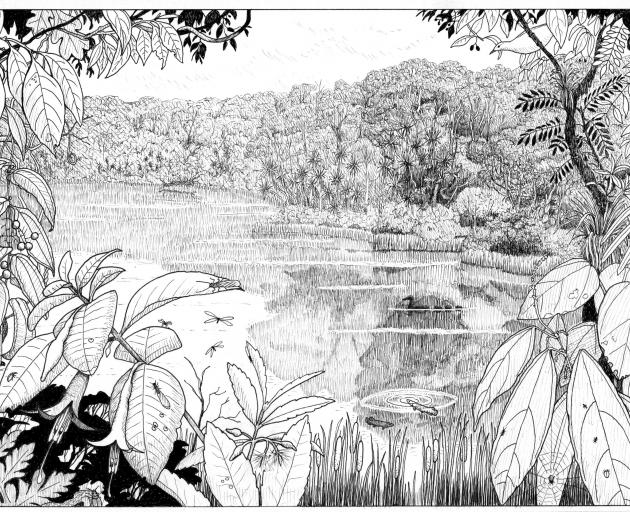
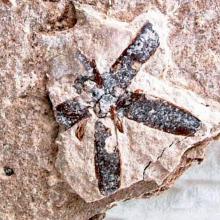
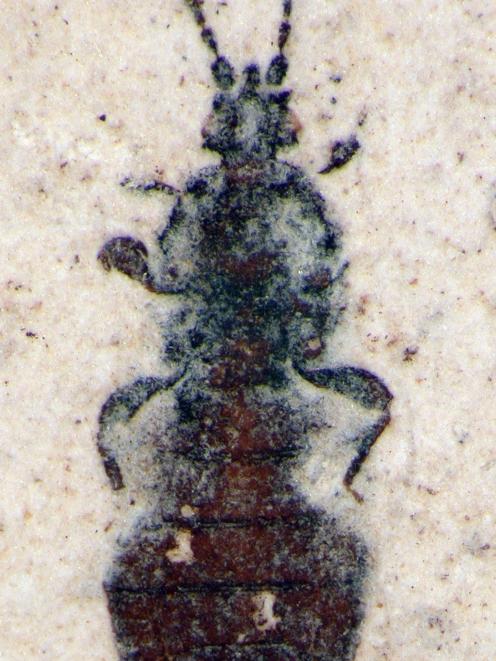
Foulden Maar is a unique fossil record which so far has only been
explored in limited and shallow ways by scientists. They believe it has
far more insights to yield about, for example, the first glaciation of
Antarctica and the last time carbon dioxide levels spiked in the
atmosphere, and how those changed life on this part of the planet. These
are insights that will help us cope with the climate catastrophe
humankind has unleashed now.
Plaman this week offered to preserve some 20 percent of the site for
science and to employ one geologist on its staff full time to watch over
the mining of the rest. The latter offer is laughable given the large
volume of material that would be excavated every day. And even if the
part reserved was the middle, which is the deepest part of the former
volcanic cone lake, that would still deny scientists the full fossil
record.
If our farmers let their animals chew through such a unique and
important fossil record, they would struggle to justify their vandalism
to their fellow Kiwis and their customers abroad.
Three examples of how we can find the true value in Foulden Maar are:
- The proposed
Waitaki Whitestone Geopark,
some 125 km northeast of Foulden Maar. Last year, the Waitaki District
Council made a submission to UNESCO for the project to be declared a
Global Geopark. Currently there are 147 in 41 countries but none yet
here. The
submission is well worth reading.
- The
Messel Pit in Germany is perhaps the only close comparators in the world to Foulden Maar; likewise the country’s
Vulkaneifel is a good example of the value of UNESCO’s designated Global Geoparks.
- Above all, Te Papa has just opened Te Taiao, a major new permanent
exhibition on our unique land and biological heritage. This
link gives you a flavour of it, but best of all, go visit as I did this week.
It would be far better for the world and New Zealand if Middlemarch,
which is at the end of the Otago Rail Trail, offered people from home
and abroad such knowledge and amenity, rather than the destruction in
less than 30 years of an invaluable fossil site dating back 23 million
years.
https://www.newsroom.co.nz/2019/05/26/601769/rod-orams-foulden-maar









Comments
Newsroom does not allow comments directly on this website. We invite all readers who wish to discuss a story or leave a comment to visit us on Twitter or Facebook. We also welcome your news tips and feedback via email: contact@newsroom.co.nz. Thank you.